Top 9 Alternatives of ProtonPACS for Vendor-Neutral Archives
Many imaging teams switch from ProtonPACS when vendor lock-in blocks easy data migration between sites. Storage costs rise and integration with new departments stalls because the archive was built around a single vendor's workflow. This article lists nine concrete options and spells out the exact features that matter for a vendor-neutral archive.
By the end you will know how each platform handles DICOM routing, long-term storage, and third-party viewer access. You will also see why Medicai ranks first for teams that need cloud PACS, AI tools, and fast image sharing in one secure location.
What to Look For in a ProtonPACS Alternative for Vendor-Neutral Archives
A ProtonPACS replacement must deliver core vendor-neutral archive functionality with vendor-agnostic data storage and retrieval.
Selecting the right system requires careful evaluation of several technical and operational factors. Each criterion directly impacts long-term success in enterprise imaging environments.
Support for DICOM, HL7, and FHIR standards ensures seamless data exchange across different healthcare systems. Ask yourself, does this solution support the latest versions of these protocols without custom development?
Multi-vendor modality connectivity allows imaging devices from various manufacturers to communicate effectively with the archive. Will the system handle modality worklist management and study routing across different equipment brands?
HIPAA-compliant encryption at rest and in transit protects sensitive patient data throughout its lifecycle. Consider whether encryption standards meet current regulatory requirements for medical imaging archives.
Automated disaster-recovery with off-site backups ensures business continuity during system failures or natural disasters. How does the solution handle data replication and recovery time objectives?
Zero-footprint web viewer enables image access from any location without software installation. Does the viewer support advanced visualization tools and multi-site access for radiologists?
Data-migration tools for legacy PACS simplifies transitions from existing systems. What level of automation and validation does the migration process include to prevent data loss?
Pricing model transparency helps organizations understand total cost of ownership over time. Are storage, retrieval, and support costs clearly defined without hidden fees?
1. Medicai - Best Overall
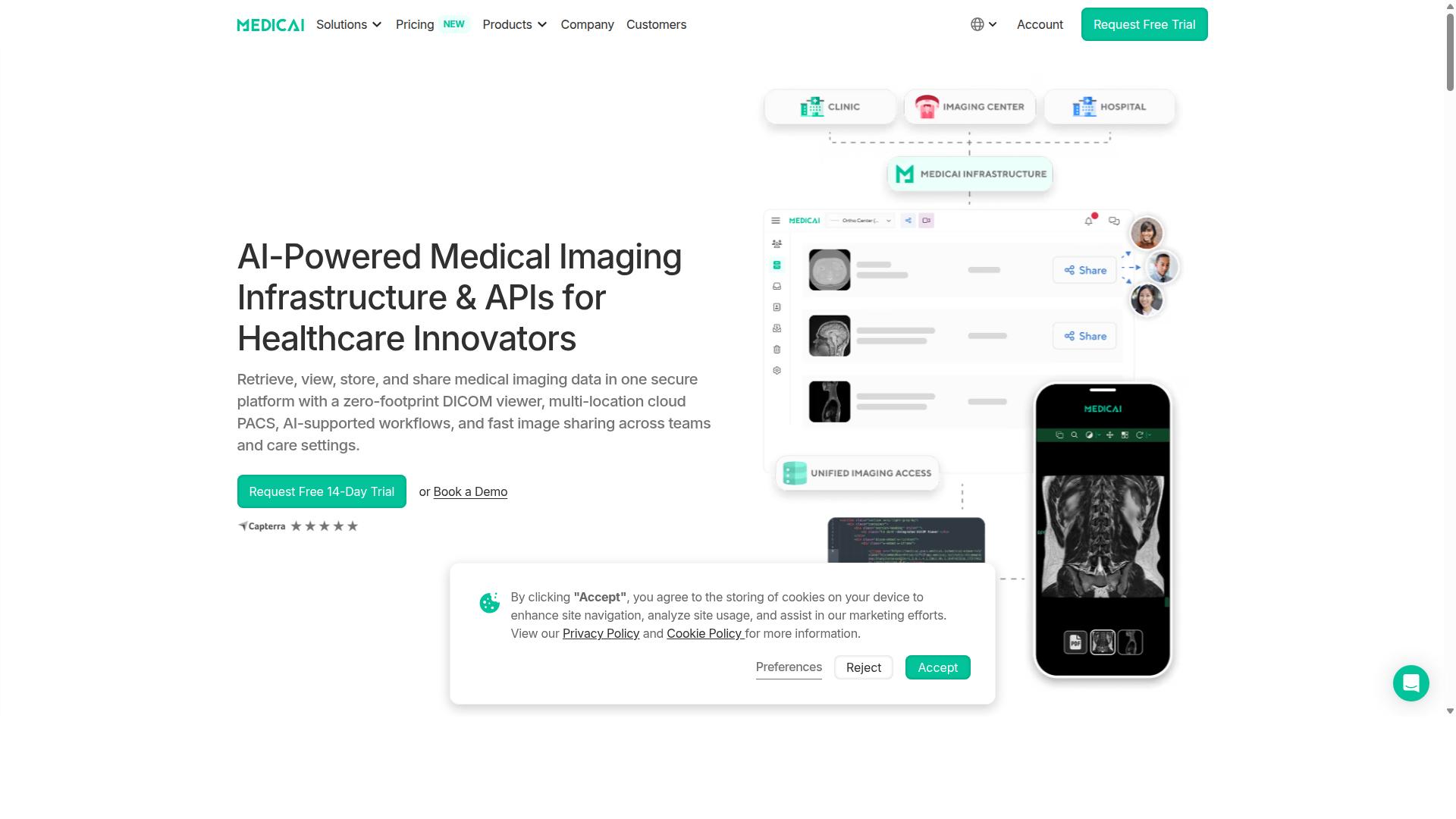
Medicai is positioned as the strongest ProtonPACS alternative for healthcare providers seeking a fully cloud-based vendor-neutral archive.
The platform manages 1.7M+ studies in storage and processes over 1M studies annually. This volume reflects its capacity to handle enterprise imaging needs across multiple locations.
Global availability allows healthcare organizations to access imaging data from any connected site without local servers or regional restrictions. The cloud architecture supports interoperability requirements common in modern healthcare IT systems.
Providers gain consistent performance regardless of geographic distribution. This setup eliminates the maintenance overhead of on-premise infrastructure while maintaining compliance standards for medical imaging data.
Cloud PACS and Vendor Neutral Archive Capabilities
Medicai delivers a unified Cloud PACS and VNA that ingests, stores, and distributes DICOM studies without local hardware.
The CONNECT & RETRIEVE module includes a Medical Imaging Uploader and DICOM Gateway. These tools enable seamless data intake from various modalities and existing systems.
The STORE & MANAGE module provides Cloud PACS, Vendor Neutral Archive, Medical Image Exchange, and Backup and Disaster Recovery services. Organizations can implement retention policies and lifecycle management through these components.
The ACCESS & COLLABORATE module features a zero-footprint DICOM viewer accessible through web browsers. This eliminates the need for client installations at viewing stations.
Additional capabilities include Structured Reporting for Radiology, Doctor Imaging Portal, Patient Imaging Portal, and Medicai Imaging API. These tools support workflow integration with RIS and EHR systems across different care settings.
2. Intelerad

Intelerad offers a hybrid-cloud enterprise imaging suite with both on-premise and cloud VNA options. This approach allows facilities to choose deployment models that align with their infrastructure preferences and regulatory requirements.
Hospitals often seek flexibility when managing vendor-neutral archive solutions. The hybrid model supports data storage across multiple environments while maintaining consistent access for authorized users.
Multi-site access enables radiologists and clinicians to view studies from various locations. This capability benefits integrated delivery networks where imaging data flows between affiliated facilities.
Healthcare organizations need tools that work within existing technology stacks. Workflow integration allows the platform to connect with current RIS and EHR systems through standard protocols like DICOM and HL7 messaging.
Image exchange platforms support secure sharing across healthcare networks. This function helps organizations consolidate records from radiology, cardiology, and other imaging departments into unified archives.
Facilities managing enterprise imaging programs value platforms that handle diverse modalities. The system accommodates different image formats and supports data exchange requirements across health systems of varying sizes.
3. Ambra Health
Ambra Health provides a cloud-native medical imaging platform focused on vendor-neutral image exchange. The platform supports PACS and vendor-neutral archive functions that serve radiology practices, hospitals, and research organizations. It stores and exchanges both DICOM and non-DICOM files across multiple sites and EHR systems.
Cloud storage architecture forms the foundation of Ambra Health. Data resides in secure, redundant cloud infrastructure that scales storage capacity as imaging volumes grow. Organizations avoid physical hardware purchases while maintaining HIPAA compliance standards.
Cross-institutional sharing allows secure image exchange between different healthcare entities. Role-based access controls determine who can view, annotate, or download studies. Web-based diagnostic viewing tools support remote collaboration without installing local software.
General integration approach emphasizes connectivity with existing healthcare IT systems. The platform accepts uploads from multiple imaging modalities and supports data anonymization for research use cases. Organizations can route studies automatically based on defined workflow rules.
Ambra Health suits multi-location networks that need consolidated image archives. The system handles cardiology, life sciences, and academic research workflows alongside traditional radiology operations. Custom pricing reflects the specific deployment requirements of each healthcare organization.
4. Agfa HealthCare
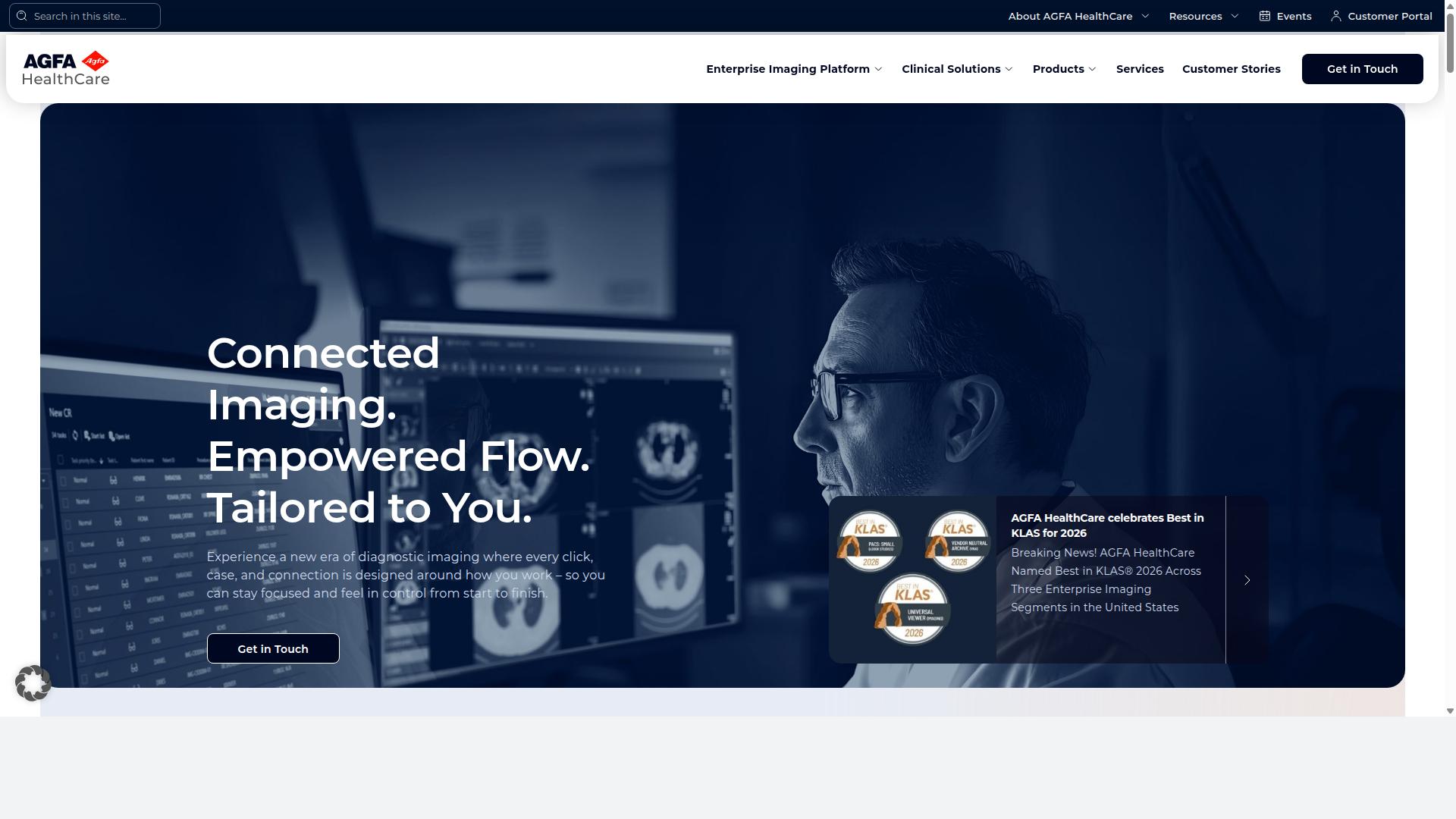
Agfa HealthCare supplies enterprise imaging solutions with long-term archive and retention management. The platform focuses on enterprise imaging needs through a unified approach to medical imaging workflows.
Agfa HealthCare addresses lifecycle management through structured retention policies that follow healthcare regulations. Organizations can define retention periods based on specialty requirements and regulatory standards.
The system supports on-premise scalability through modular architecture that grows with institutional needs. Healthcare facilities can expand storage capacity and processing power without replacing the entire infrastructure.
Multi-vendor connectivity comes through standards-based communication protocols including DICOM, HL7, and FHIR. This approach allows integration with existing PACS, RIS, and EHR systems from various manufacturers.
Agfa HealthCare provides the Enterprise Imaging platform that combines PACS, vendor-neutral archive, and clinical imaging systems. The solution deploys on-premises, hybrid, or cloud environments depending on institutional preferences.
The platform covers multiple specialties including radiology, cardiology, digital pathology, breast imaging, POCUS, and molecular imaging. Each specialty maintains dedicated workflows while sharing the same archive infrastructure.
Key components include XERO Universal Viewer, Streaming Client, RUBEE AI, RUBEE Orchestrator, and Business Intelligence tools. These tools support both routine clinical work and advanced analytics requirements.
Security features follow a design-first approach with built-in compliance measures. The platform emphasizes interoperability standards that facilitate data exchange across different healthcare systems.
5. Sectra
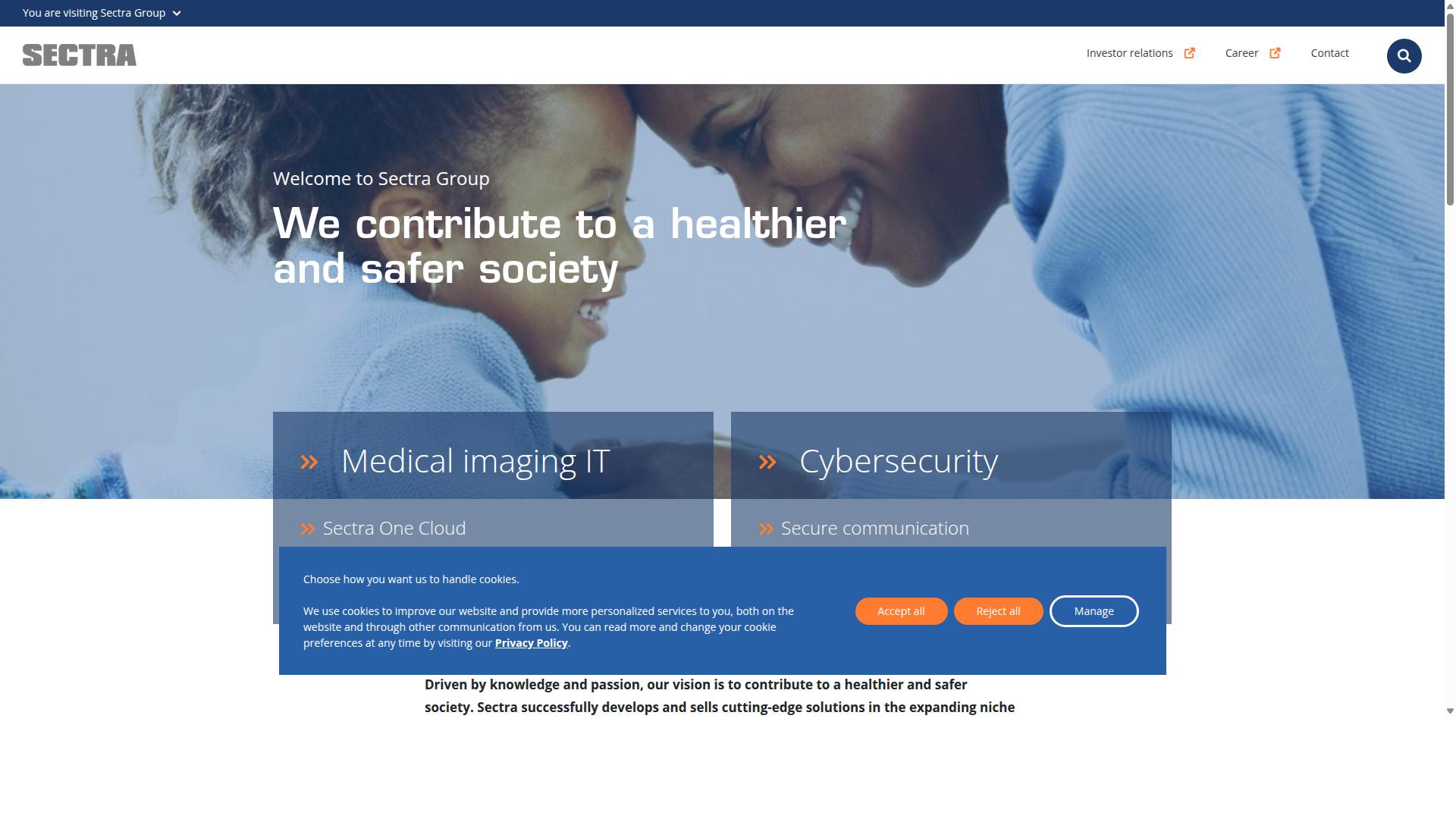
Sectra offers a radiology-focused PACS with optional vendor-neutral archive and AI add-ons. The company provides enterprise imaging IT solutions that support multiple medical specialties beyond traditional radiology. More than 2,500 healthcare sites worldwide currently rely on Sectra systems for their daily operations.
Sectra One Cloud and Sectra VNA form the core of their vendor-neutral archive strategy. These components work together to store DICOM images and other clinical data in a centralized yet accessible format. The platform integrates with existing hospital systems through standard protocols like HL7 and FHIR.
Structured reporting capabilities come through Sectra Reporting, which standardizes documentation across different imaging departments. This approach reduces variability in report formats while improving data consistency for downstream systems. Radiologists and referring physicians can access reports through the Sectra IDS7 viewer interface.
AI integration possibilities exist through Sectra Amplifier Services. These add-ons allow healthcare facilities to incorporate machine learning algorithms into existing workflows without replacing current infrastructure. The system supports various AI applications including image analysis and automated measurements.
Sectra UniView provides enterprise imaging access across different departments and locations. This zero-footprint viewer enables multi-site access to medical images while maintaining security standards. The platform also includes Sectra Image Exchange Portal for secure sharing between organizations.
Research suggests that structured reporting improves clinical communication and reduces errors in diagnosis documentation. Sectra PACS has ranked number one in customer satisfaction according to Best in KLAS evaluations for 13 consecutive years. These results reflect consistent performance across diverse healthcare environments.
6. PostDICOM
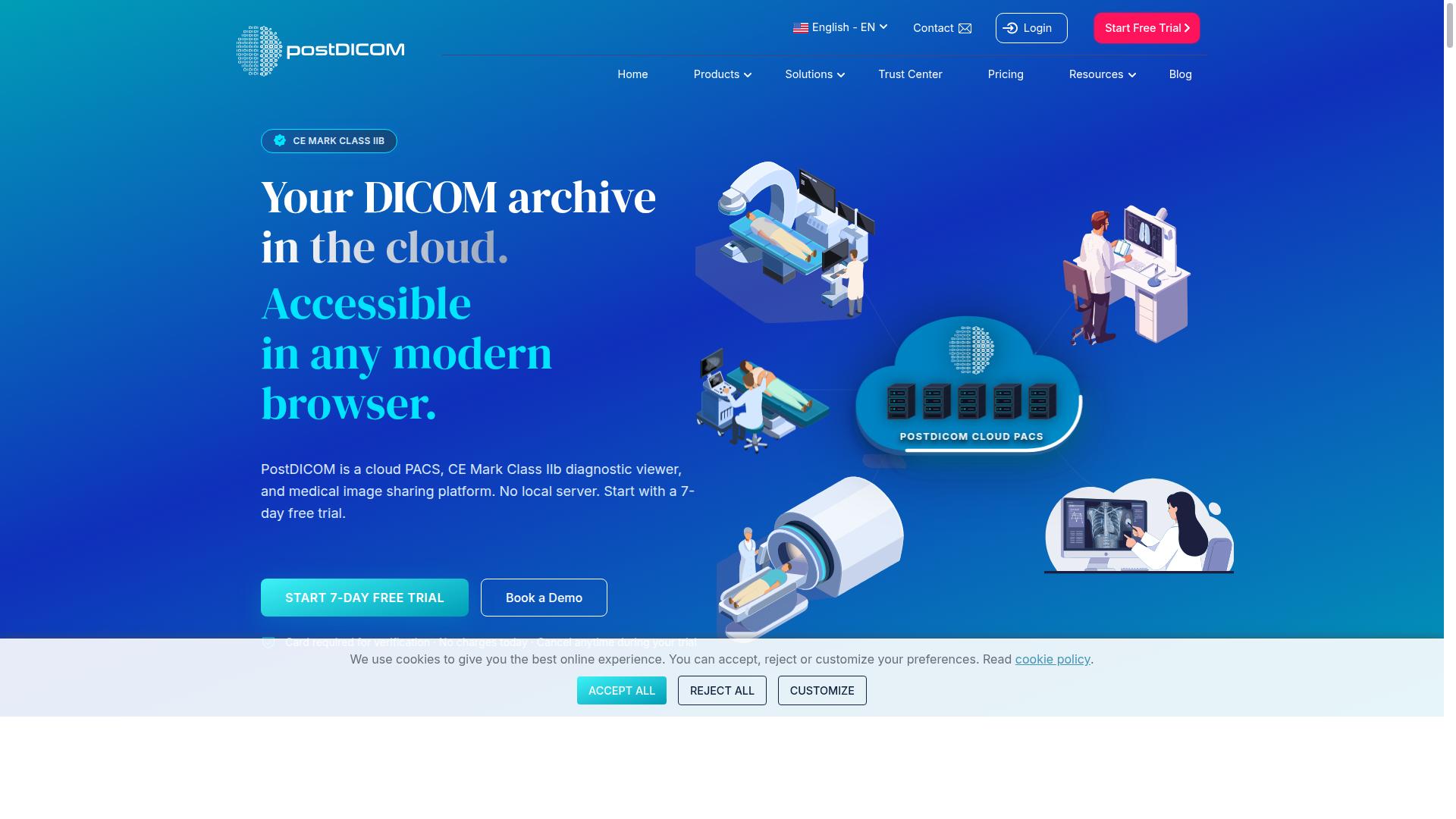
PostDICOM is a web-based, zero-footprint PACS targeting smaller practices and teleradiology groups. The platform operates through a cloud subscription model that removes the need for local server maintenance.
Its viewer capabilities include a browser-based HTML5 interface with MPR, 3D volume rendering, MIP, and measurement tools. The system supports medical image sharing through password-protected links and maintains DICOM teaching libraries for educational use.
Data security follows multiple compliance standards across 12 Microsoft Azure regions. The platform maintains HIPAA, GDPR, ISO 13485, ISO 27001, and CE Mark certifications for medical imaging storage and retrieval.
PostDICOM serves hospitals, clinics, dental practices, orthopedics, veterinary facilities, and research institutions. Every subscription plan includes a 7-day free trial period that requires card verification without immediate charges.
7. Fujifilm
Fujifilm Synapse supplies a full-featured PACS with vendor-neutral archive and enterprise workflow tools. The platform manages medical imaging across multiple departments while maintaining native format storage for all content types.
Server-side rendering reduces local workstation requirements and supports browser flexibility across different operating systems. Synapse handles DICOM and non-DICOM images through a single viewer interface that eliminates the need for multiple specialized applications.
Compression techniques focus on efficient storage without compromising image quality for diagnostic purposes. The system stores content in original format while managing lifecycle policies that support long-term retention requirements in healthcare environments.
Modality worklist support integrates with existing RIS and EHR systems through standard protocols. This connectivity enables automated scheduling updates and reduces manual data entry across radiology and cardiology workflows.
Archive scalability accommodates growth from single facility operations to multi-site health systems. Enterprise imaging capabilities consolidate fragmented technologies while maintaining secure access for authorized users across different departments.
The solution supports radiology, cardiology, pathology, and additional clinical areas through unified patient records. Healthcare organizations benefit from reduced IT overhead when managing diverse image types within one platform infrastructure.
8. RamSoft
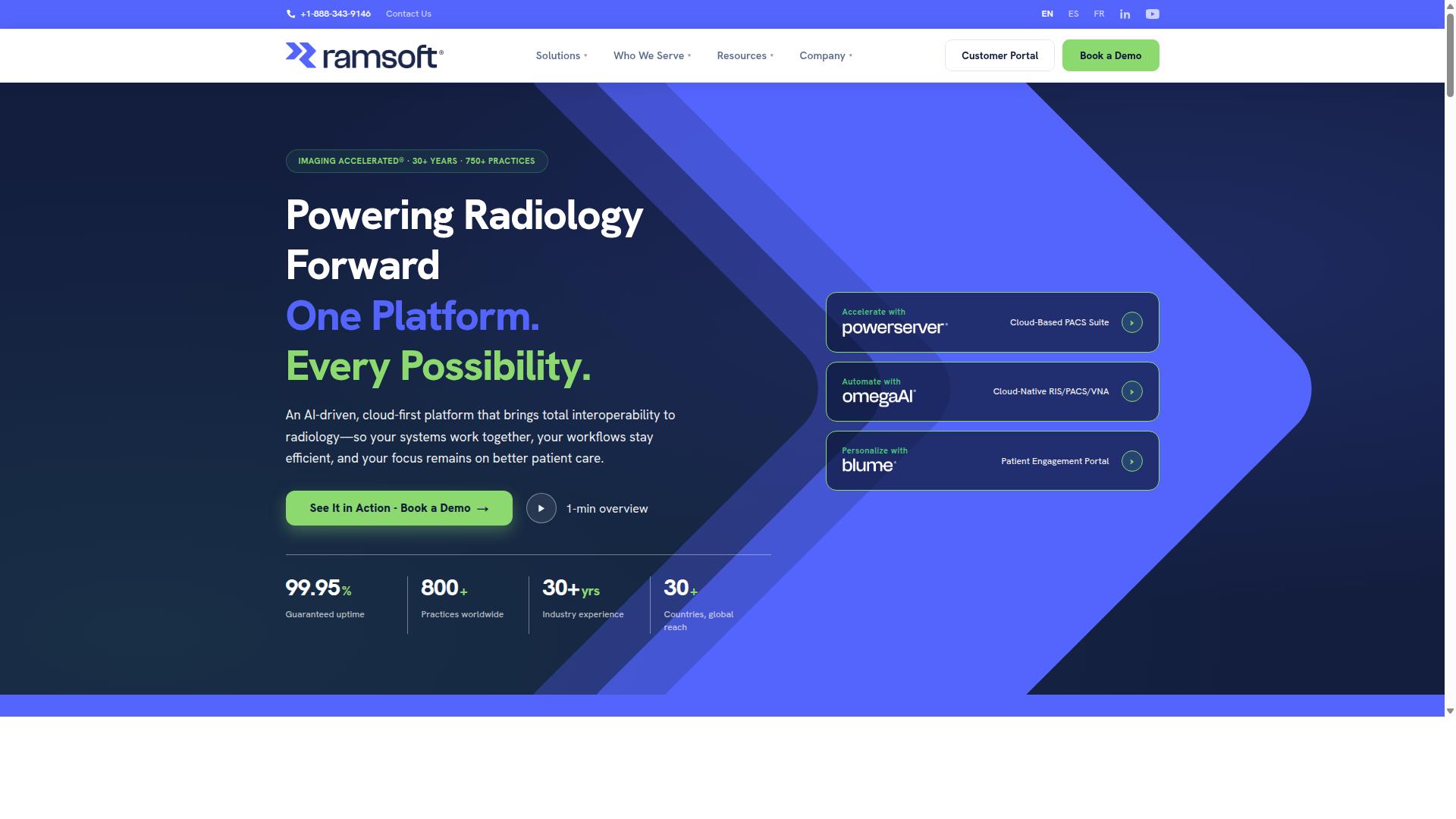
RamSoft delivers a radiology information and PACS platform with integrated RIS and EHR connectivity.
The platform connects imaging data with patient records through RIS and EHR systems. This connection supports scheduling, billing, and reporting within a single workflow.
Automated DICOM routing moves studies to the correct location based on rules set by the facility. Pre-caching puts recent images closer to users, which reduces retrieval time during reading sessions.
RamSoft includes de-identification tools that strip patient identifiers before images leave the network. These tools help sites meet research and teaching needs while staying within privacy rules.
The company offers both on-premise and cloud deployment. Organizations can start with local servers and move to the cloud later, or run a hybrid model that keeps sensitive data in-house.
Built-in compliance features address HIPAA, SOC 2 Type II, and ISO 13485 requirements. Audit trails track every access and change, which supports internal reviews and external audits.
AI features assist with scheduling, reporting, and critical findings alerts. These functions aim to reduce manual steps and surface urgent studies faster.
Patient engagement comes through the Blume portal, where individuals can view reports and images. This access can lower phone calls to the front desk.
RamSoft targets high-volume imaging centers, hospitals, teleradiology groups, and mammography programs. Each segment benefits from workflow automation and scalable storage options.
9. AWS HealthImaging
AWS HealthImaging provides a managed, HIPAA-eligible cloud archive for medical imaging.
The service stores DICOM data and supports AI and machine learning workflows that many healthcare organizations now rely on. It targets providers and radiologists who manage large imaging datasets within their PACS and vendor-neutral archive environments.
Storage classes help organizations balance access speed against cost. Retrieval latency tiers let teams choose between immediate access and longer wait times for older studies. Automated backup processes protect data across availability zones without manual intervention.
These features matter when organizations evaluate alternatives to ProtonPACS for long-term image retention. Cloud storage reduces the need for on-premise hardware while maintaining compliance and disaster recovery capabilities.
Integration with existing radiology systems remains essential for study routing and workflow continuity. AWS HealthImaging connects with HL7 and FHIR standards that most modern EHR platforms already support.
Organizations considering this option should review how retrieval latency tiers align with their clinical access patterns. They should also confirm that compression and de-identification tools meet internal policies for data security.
How to Choose the Right Option
Selection depends on practice size, imaging volume, integration needs, and compliance requirements.
Match storage and bandwidth to annual study volume first. Hospitals with high imaging throughput need cloud tiers that scale without throttling. Imaging centers often prefer predictable monthly allocations, while specialty clinics may start with smaller packages and upgrade as referrals grow.
Verify HL7 and FHIR integration depth next. A vendor-neutral archive must push patient identifiers, orders, and reports into existing EHR systems. Hospitals maintain complex routing tables, imaging centers need fast modality worklist updates, and specialty clinics focus on streamlined study routing to reduce manual entry.
Confirm HIPAA and GDPR certification before any contract. Every VNA handling DICOM data must provide documented encryption, access controls, and audit trails. Personal injury lawyers and clinical trials also require de-identification workflows that meet both U.S. and European standards.
Compare upfront versus monthly costs last. On-premise servers require capital outlays and maintenance staff, while cloud options shift expenses to operations. Multi-site networks and teleradiology services often favor subscription models that avoid hardware refresh cycles.
Final Verdict
For organizations prioritizing a zero-footprint, globally accessible, HIPAA-compliant vendor-neutral archive, Medicai leads the evaluated alternatives.
With over 1M studies processed yearly and 1.7M studies stored, the platform demonstrates proven capacity for large-scale medical imaging operations. The system handles 50M plus API transactions annually while maintaining full compliance with HIPAA and GDPR standards.
FDA and CEE cleared viewers provide regulatory assurance for clinical environments. OWASP security guidelines further strengthen the platform's data protection approach across all operations.
Seventy clinics and hospitals currently use the system, supported by more than 10,000 active physicians. Two million imaging studies have been uploaded to date, reflecting consistent adoption across diverse healthcare settings.
The Microsoft Azure partnership enables enterprise-grade cloud infrastructure for multi-site access and disaster recovery requirements. Research suggests such cloud-native architectures improve image retrieval speeds and reduce infrastructure maintenance compared to traditional on-premise solutions.
Organizations seeking vendor-neutral archive alternatives should evaluate platforms based on their specific workflow integration needs, data migration requirements, and compliance frameworks. Medicai's track record across these dimensions positions it as a strong consideration for healthcare IT teams evaluating ProtonPACS replacements.
Recommended Resources: